
Top 10 Fashion Photography Poses to Master in 2026
In fashion photography, the right pose transforms an image from a simple snapshot into a powerful statement. It's the silent language that communicates mood, highlights garment details, and defines a brand's aesthetic. A compelling pose can make the difference between a scroll-stopping campaign and one that gets lost in the noise. For brands and creators, capturing a diverse range of effective fashion photography poses is essential for building a strong visual identity and engaging an audience.
However, achieving this variety and quality through traditional photoshoots can be a significant investment of time, resources, and budget. Coordinating models, photographers, and studios to capture every necessary angle and variation is a complex process. This is where a foundational understanding of classic poses and the power of AI-driven tools becomes a game-changer.
This comprehensive guide breaks down 10 iconic and versatile fashion photography poses, offering a complete toolkit for creating dynamic, professional-grade imagery. For each pose, you'll find:
- Step-by-step model directions for achieving the perfect form.
- Essential camera, framing, and lighting notes to enhance the shot.
- Ready-to-use prompts for AI image generators like PhotoMaxi, enabling you to batch-generate endless on-brand variations in minutes.
Whether you are an e-commerce brand looking to refresh product listings, a marketing team developing a new campaign, or a content creator aiming for a polished feed, this guide provides the foundational knowledge and practical tools you need. Let’s dive into the poses that will elevate your visual content.
1. Over-the-Shoulder Pose
A cornerstone of classic portraiture and high-fashion photography, the over-the-shoulder pose is a timeless technique celebrated for its ability to create a sense of candid intimacy and graceful lines. The model angles their body away from the camera and then turns their head back, looking over their shoulder to meet the lens. This simple action elongates the neck, accentuates the jawline, and creates a dynamic S-curve through the spine, producing a universally flattering silhouette.
This pose is incredibly versatile, making it a staple in everything from Vogue editorials to high-engagement influencer content. Its primary strength lies in maintaining a direct connection with the viewer while showcasing the back, side, or shoulder details of a garment. It’s the perfect solution for highlighting an open-back dress, the intricate embroidery on a jacket sleeve, or the unique cut of a designer blouse without sacrificing the model's engaging presence.
How to Execute the Over-the-Shoulder Pose
Model Directions:
- Angle Your Body: Stand with your feet slightly apart and rotate your shoulders approximately 45 degrees away from the camera.
- Turn Your Head: Slowly turn your head back toward the camera until you can comfortably see the lens. Avoid forcing the turn, as it can create tension.
- Create Space: Gently lift your chin away from your shoulder. This creates a more defined jawline and prevents the chin from tucking into the neck, which can cause unflattering shadows.
- Relax Your Hands: Let your arms hang naturally or place one hand on your hip or in a pocket to add structure.
Camera & Lighting:
- Framing: A medium shot or a three-quarter shot works exceptionally well to capture the elegant lines of the pose. For beauty shots, a close-up can emphasize the facial angle and neckline.
- Lighting: Use a soft key light positioned slightly to the side of the camera to illuminate the model's face as they turn. A subtle rim light from behind can help separate the model from the background and highlight the texture of their hair and clothing.
PhotoMaxi Prompt for Batch Generation
To create consistent variations for your brand's lookbook or social media, use a structured prompt like this:
full body fashion photo, female model in a city street, wearing a silk backless evening gown, executing a graceful over-the-shoulder pose, looking at camera, soft morning light, shallow depth of field --style elegant, editorial --ar 9:16
2. Walking/Striding Pose
A foundational pose for lifestyle and street style photography, the walking or striding pose captures dynamic energy and brings garments to life. This technique involves the model moving toward, away from, or across the camera's frame, creating a sense of natural movement that feels both candid and confident. It is one of the most effective fashion photography poses for demonstrating how clothing drapes, flows, and functions in real-world motion.
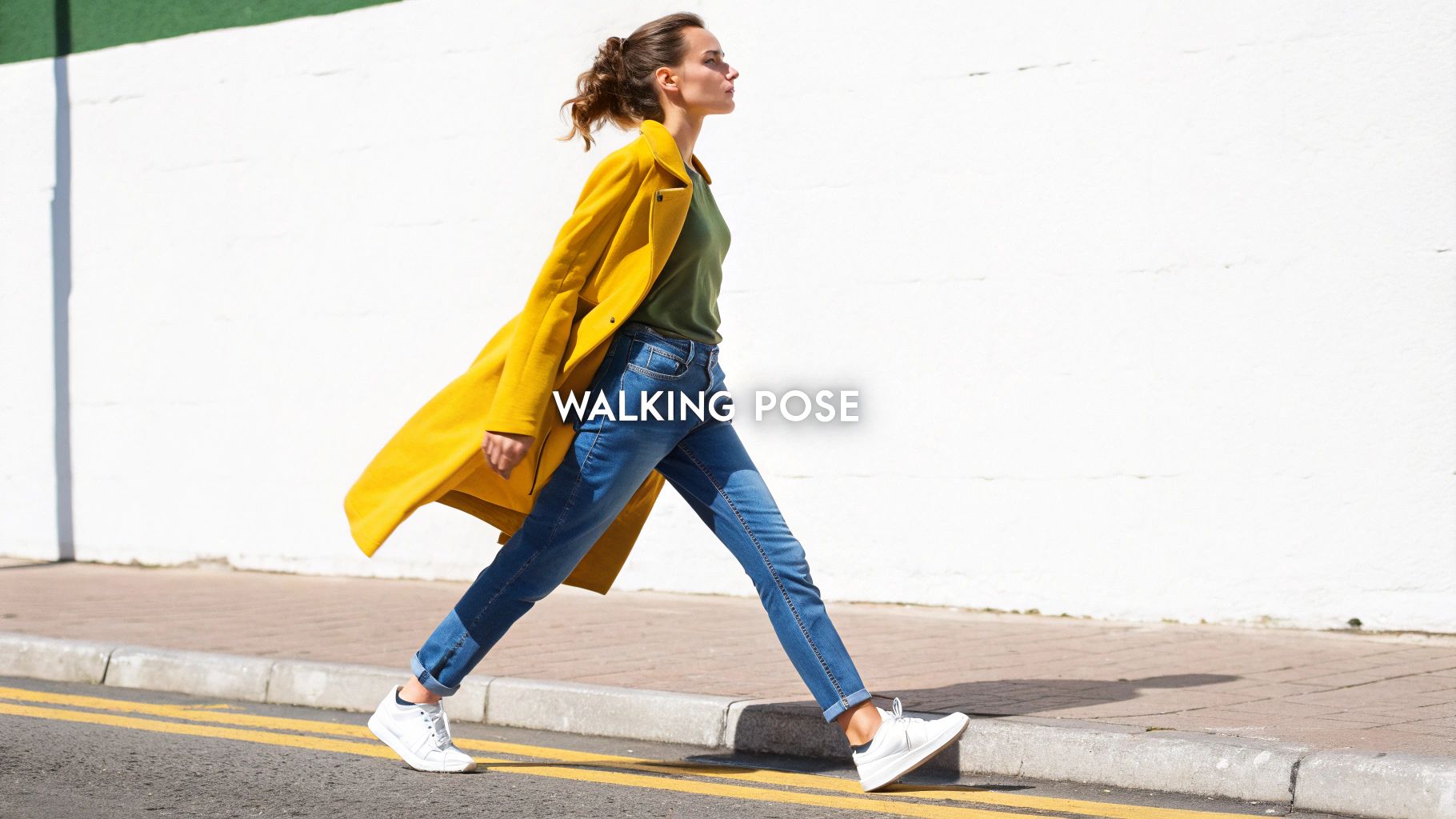
This pose is essential for everything from athletic apparel campaigns by brands like Nike to high-fashion runway reports. Its power lies in its ability to tell a story and create a relatable lifestyle context. Capturing a model mid-stride effectively showcases the functionality of activewear, the elegant flow of a long skirt, or the sharp structure of a tailored coat, making the clothing feel aspirational yet accessible.
How to Execute the Walking/Striding Pose
Model Directions:
- Walk Naturally: Walk back and forth past a designated mark. Focus on a natural gait rather than an exaggerated runway stomp.
- Angle Your Body: For the most flattering lines, angle your body at approximately 45 degrees to the camera as you walk past. This creates a slimmer profile and more dynamic shapes.
- Engage Your Arms: Allow your arms to swing naturally in opposition to your legs. Avoid stiffness; letting your hands gently brush against your pockets or bag can add a touch of authenticity.
- Vary Your Gaze: Alternate between looking straight ahead, glancing toward the camera, and looking off to the side to create a variety of candid-style shots.
Camera & Lighting:
- Framing: A full-body or three-quarter shot is ideal for capturing the entire movement. Shooting from a slightly lower angle can elongate the legs and add a sense of power to the stride.
- Shutter Speed: Use a faster shutter speed (e.g., 1/250s or higher) to freeze the motion cleanly. Alternatively, a slower shutter speed can be used for an intentional motion blur effect.
- Lighting: Natural, diffused outdoor light works best to create a realistic street-style feel. If in a studio, use a large, soft light source to mimic daylight and ensure even illumination as the model moves.
PhotoMaxi Prompt for Batch Generation
To generate a series of dynamic walking shots for a campaign or social media, use a descriptive prompt:
full body street style photo, female model confidently striding across a crosswalk in New York City, wearing a tailored blazer and wide-leg trousers, long coat flowing behind her, mid-stride, looking slightly off-camera, bustling city background, golden hour lighting, captured with a telephoto lens --style chic, editorial --ar 4:5
3. Sitting with Crossed Legs Pose
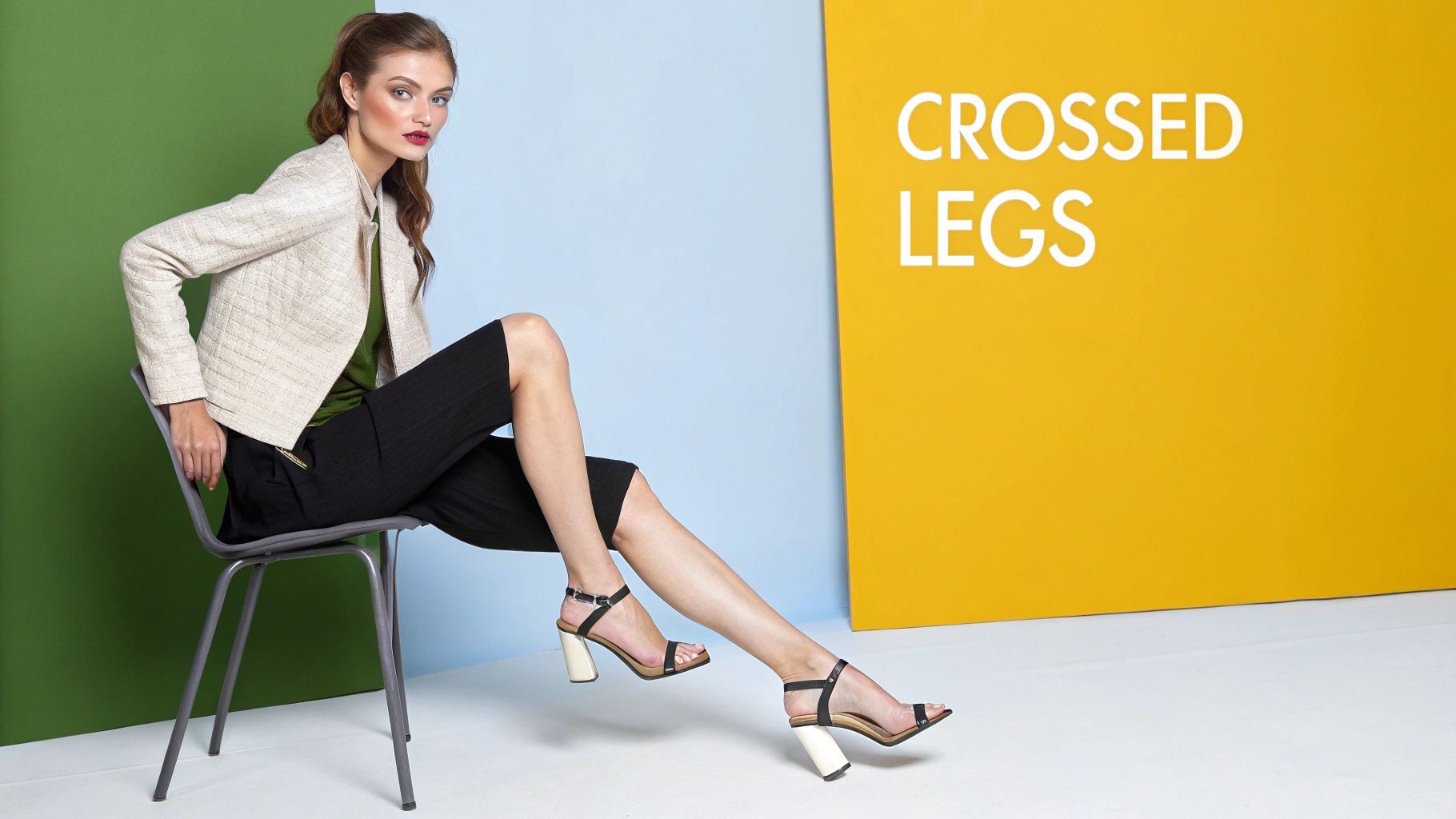
A symbol of elegance, composure, and relaxed confidence, the sitting with crossed legs pose is a fundamental technique in both editorial and commercial fashion photography. This pose involves the model sitting with their legs crossed, typically at the knee, to create a sophisticated silhouette that conveys a sense of poise and control. It’s an incredibly powerful tool for creating strong diagonal lines that guide the viewer’s eye through the frame.
This pose is a go-to for luxury campaigns because it naturally highlights footwear, hosiery, and the drape of trousers or skirts. Whether featured in a high-fashion magazine spread or a premium footwear lookbook, it effectively draws attention to the lower half of the body while maintaining a graceful and composed upper body posture. Its versatility allows it to project anything from professional authority in a power suit to casual chic in a lifestyle shoot.
How to Execute the Sitting with Crossed Legs Pose
Model Directions:
- Sit at the Edge: Perch on the front edge of the chair or stool. This prevents slouching and helps elongate the torso and legs for a more flattering line.
- Angle Your Body: Turn your body approximately 45 degrees to the camera. This creates depth and avoids a flat, two-dimensional appearance.
- Cross Your Legs: Cross one leg over the other at the knee. Point the toe of the top leg to extend the visual line. Ensure the cross is firm but relaxed.
- Posture is Key: Maintain a straight back and relaxed shoulders. You can lean slightly forward or backward to alter the mood of the shot. For more advanced techniques, check out our guide on capturing the perfect studio portrait.
Camera & Lighting:
- Framing: A full-body or three-quarter shot is ideal for capturing the complete pose and showcasing the featured apparel. Shooting from a slightly lower angle can further elongate the legs and add a sense of power.
- Lighting: Use a main light source (key light) from the side to create soft shadows that define the shape of the legs and the texture of the clothing. A fill light can be used to soften any harsh shadows on the lower leg or face.
PhotoMaxi Prompt for Batch Generation
To generate a series of seated poses for an e-commerce shoe catalog or a sophisticated brand campaign, use a detailed prompt like this:
full body fashion photo, chic female model sitting on a minimalist velvet armchair, legs elegantly crossed at the knee, wearing tailored wide-leg trousers and stiletto heels, in a modern sunlit loft, looking confidently at the camera, soft natural light --style sophisticated, commercial --ar 4:5
4. Leaning Against Surface Pose
A staple in lifestyle and commercial fashion photography, the leaning pose introduces a casual, effortless cool to any shot. By having the model lean against a wall, railing, or another vertical surface, this technique breaks the stiffness of a standard standing pose, creating natural lines and a relaxed atmosphere. It conveys a sense of comfort and approachability while still allowing for a sophisticated, full-body presentation of an outfit.
This pose is incredibly effective for urban streetwear lookbooks, influencer content, and e-commerce product shots where the goal is to show the clothing in a relatable, everyday context. Its strength lies in its ability to create interesting angles and compositions effortlessly. The interaction with the environment adds depth and context, making the image feel more like a captured moment than a staged photograph, which resonates strongly with modern audiences.
How to Execute the Leaning Against Surface Pose
Model Directions:
- Establish a Base: Stand near a wall or other surface and gently lean your shoulder or back against it. Shift most of your weight onto your back leg, the one closer to the surface.
- Create Dimension: Position your front leg slightly forward, bending the knee to create a soft, dynamic angle. This avoids a flat, two-dimensional look.
- Position Your Arms: Avoid letting your arms hang limply. Place one hand in a pocket, rest it on your thigh, or cross your arms loosely to frame the torso and highlight the garment's fit.
- Vary Your Gaze: Alternate between looking directly at the camera, looking off to the side, or looking down for a more pensive, candid feel.
Camera & Lighting:
- Framing: A full-body or three-quarter shot is ideal to capture the entire silhouette and the interaction with the environment. Experiment with lower camera angles to add a sense of empowerment.
- Lighting: Use the environment to your advantage. If leaning against a textured brick wall in the shade, a single soft light source can create beautiful, dramatic shadows that accentuate the clothing's texture and the model's form.
PhotoMaxi Prompt for Batch Generation
To generate a series of consistent, on-brand images for a campaign or social media feed, use a structured prompt:
full body fashion photo, male model leaning against a gritty urban brick wall, wearing a denim jacket and black jeans, relaxed posture, looking away from camera, overcast daylight, cinematic street style --style realistic, moody --ar 4:5
5. Hands in Hair/Touching Face Pose
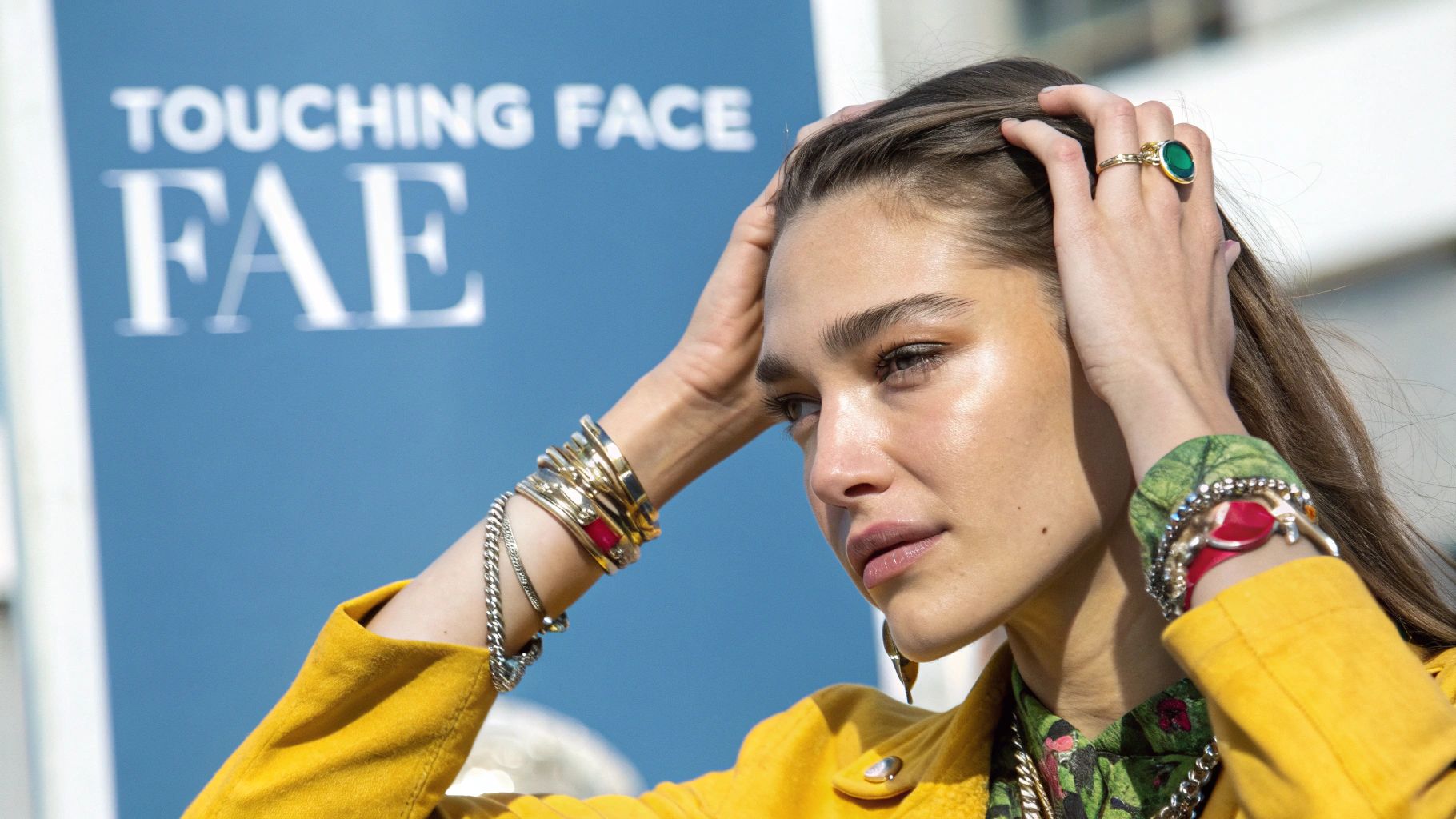
A deeply expressive and intimate technique, the hands in hair or touching face pose introduces a human element that can transform a standard fashion shot into a compelling story. By having the model interact with their own face or hair, photographers can evoke a wide range of emotions, from quiet contemplation to playful confidence. This action naturally creates leading lines, drawing the viewer's eye to specific features, accessories, or beauty elements.
This pose is a powerhouse in beauty and accessory photography, commonly seen in campaigns for luxury cosmetics, high-end jewelry, and hair care products. Its strength lies in its ability to create a focal point while adding a layer of authentic emotion. It’s the ideal way to highlight a flawless manicure, showcase a pair of statement earrings, or frame the face to emphasize a particular makeup look, all while making the image feel personal and relatable.
How to Execute the Hands in Hair/Touching Face Pose
Model Directions:
- Keep It Light: Use a gentle touch. Lightly graze the cheek, sweep fingers through the hair, or rest a hand delicately near the collarbone. Avoid pressing into the skin, which can create unnatural indents.
- Create Purposeful Shapes: Use your hands to frame your face, creating triangles or other geometric shapes that guide the viewer’s eye. This adds structure and artistic composition to the shot.
- Relax Your Fingers: Avoid stiff, straight fingers. A soft, natural curve in the hand and fingers appears more elegant and relaxed.
- Vary the Placement: Experiment with different positions. Try one hand, then both; place them on the temple, chin, neck, or running through the hair to find what feels most authentic for the mood.
Camera & Lighting:
- Framing: Close-up and medium shots are perfect for this pose, as they emphasize the connection between the hands and face. This framing is ideal for highlighting jewelry, makeup, and hair texture.
- Lighting: Soft, diffused lighting is key. A beauty dish or a large softbox positioned in front of the model will create a flattering light that minimizes harsh shadows, especially those cast by the hands onto the face.
PhotoMaxi Prompt for Batch Generation
To generate a series of intimate beauty shots or accessory-focused content, use a detailed prompt that specifies the hand interaction:
beauty shot of a model with dramatic makeup, one hand gently touching her cheek, wearing large diamond stud earrings, studio lighting, looking thoughtfully away from camera, soft focus background --style high-fashion, intimate --ar 4:5
6. Arms Crossed Over Chest Pose
A quintessential pose for conveying power and confidence, the arms crossed over the chest stance is a staple in professional and high-fashion contexts. This pose projects an aura of authority, self-assurance, and composure, making it a powerful tool for visual storytelling. By creating strong, deliberate lines across the torso, it frames the upper body, drawing attention to the shoulders, neckline, and sleeves of a garment.
This pose is incredibly effective in corporate fashion, luxury brand campaigns focused on power dressing, and any editorial theme centered on empowerment. Its strength lies in its ability to create a structured, grounded silhouette that communicates control and poise. It is the perfect choice for showcasing a sharply tailored blazer, the texture of a luxury knit, or the fit of a business blouse, all while reinforcing a message of confidence and professionalism.
How to Execute the Arms Crossed Over Chest Pose
Model Directions:
- Angle Your Body: Turn your body approximately 45 degrees away from the camera. This avoids a confrontational, boxy look and creates a more flattering, dimensional shape.
- Cross Your Arms: Gently cross your arms over your chest or waist. Keep them slightly away from your body to avoid squishing the fabric of your clothing or creating visual bulk.
- Position Your Hands: Rest your hands on your biceps or forearms. Avoid clenching your fists; keep your hands relaxed and visible for a more elegant finish.
- Maintain Posture: Stand tall, pull your shoulders back and down, and engage your core. Pair this with a confident facial expression and direct eye contact with the lens.
Camera & Lighting:
- Framing: A three-quarter shot is ideal for capturing the full effect of the pose, including body language and the garment's fit. A medium shot can effectively highlight the texture of the apparel and the model’s confident expression.
- Lighting: Use a key light placed at a 45-degree angle to create subtle shadows that define the model's form and the structure of the clothing. A fill light can be used to soften any harsh shadows under the arms.
PhotoMaxi Prompt for Batch Generation
To generate a series of powerful and professional images for business wear lookbooks or corporate branding, use a prompt like this:
three-quarter fashion photo, professional female model in a modern office, wearing a tailored navy blue pantsuit, executing a confident arms crossed over chest pose, looking at camera, soft window lighting, blurred background --style corporate, sharp --ar 3:4
7. Lying Down/Reclining Pose
A powerful tool in high-fashion and lifestyle photography, the lying down or reclining pose transforms the model into a living sculpture, creating fluid lines and showcasing garments from a unique, often dramatic, perspective. By breaking from the vertical norm, this pose conveys a sense of luxury, leisure, and artistic expression. The model reclines on a surface, allowing the fabric and silhouette to drape and fall in a way that is impossible to capture while standing.
This pose is exceptionally effective for creating compelling compositions and highlighting full-body looks. It’s a favorite in Vogue editorials and luxury brand campaigns because it elevates the narrative, suggesting a moment of quiet introspection or opulent relaxation. Whether on a velvet chaise lounge, a sun-drenched beach, or a stark studio floor, the reclining pose turns a simple fashion shot into a storytelling masterpiece, perfect for showcasing evening wear, flowy dresses, or designer accessories.
How to Execute the Lying Down/Reclining Pose
Model Directions:
- Angle the Body: Avoid lying completely flat. Position your body at a slight angle to the camera to create depth and more flattering lines.
- Support and Arch: Use your elbows or hands to prop yourself up slightly, creating a gentle arch in your back. This adds dimension and prevents the pose from looking passive.
- Mind the Chin: Tilt your chin slightly down toward the camera to elongate the neck and define the jawline.
- Use Your Arms: Position your arms deliberately. One can be extended to create a leading line, while the other can be bent to frame the face or torso.
Camera & Lighting:
- Framing: A high-angle shot, looking down at the model, is a classic approach that can accentuate the garment's shape. A low-angle shot from the side can create a more powerful and monumental feel.
- Lighting: Lighting from the side (a large softbox, for instance) can sculpt the body and highlight the texture of the fabric. For a dreamier effect, use soft, diffused natural light from a window.
PhotoMaxi Prompt for Batch Generation
To generate artistic and varied reclining shots for a luxury campaign or editorial spread, use a prompt like this:
fashion editorial photo, model reclining on a vintage velvet sofa, wearing a flowing emerald green gown, one arm draped elegantly, dramatic side lighting from a window, moody and luxurious atmosphere, full body shot from a high angle --style cinematic, romantic --ar 4:5
8. Profile/Side Angle Pose
The profile pose is a powerful and often minimalist technique that captures the model's silhouette from a direct side angle. By having the model face 90 degrees away from the camera, this pose shifts the focus from a direct emotional connection to the pure form, lines, and contours of the face, body, and garment. It creates a graphic, almost sculptural quality, celebrated in minimalist editorials and luxury brand campaigns for its clean, artistic impact.
This pose is indispensable for showcasing specific details that are best viewed from the side. It perfectly highlights the elegant slope of a neckline, the precise cut of a sleeve, the silhouette of a structured jacket, or intricate jewelry like earrings and necklaces. The profile angle tells a story of form and fit, allowing the viewer to appreciate the garment's construction and how it drapes or holds its shape on the body, making it a key tool in high-fashion and beauty photography.
How to Execute the Profile/Side Angle Pose
Model Directions:
- Establish Your Line: Stand or sit completely sideways to the camera, creating a clean, 90-degree angle.
- Maintain Posture: Elongate your spine, roll your shoulders back and down, and keep your chin parallel to the floor. This creates a strong, confident line from head to toe.
- Position Your Arms: Let arms hang naturally, place one hand in a pocket, or bring them forward slightly to create negative space and avoid obscuring the body's silhouette.
- Focus Your Gaze: Look straight ahead into the distance with a neutral or contemplative expression. The direction of the gaze solidifies the profile's intention.
Camera & Lighting:
- Framing: A full-body shot can emphasize the entire silhouette, while a tight close-up is ideal for beauty shots or showcasing jewelry. Frame the shot with negative space in front of the model to give their gaze a direction to travel.
- Lighting: Side lighting is particularly effective here. A key light positioned to the side can sculpt the model’s features, while a rim light from the opposite side will separate them from the background, sharply defining their profile. A great lighting setup is crucial; you can explore advanced techniques in our guide on the ideal lighting setup for headshots.
PhotoMaxi Prompt for Batch Generation
To create striking profile shots for your jewelry line or a minimalist lookbook, use a structured prompt that specifies the precise angle.
side profile fashion photo, close-up on female model's face, wearing ornate diamond drop earrings, studio portrait, looking straight ahead, minimalist composition, soft Rembrandt lighting, dark grey background --style chic, artistic --ar 4:5
9. Hands in Pockets Pose
Effortlessly cool and universally relatable, the hands in pockets pose injects a dose of relaxed confidence and authenticity into fashion photography. This simple action breaks down the barrier between the model and the viewer, creating an approachable yet sophisticated aesthetic. By having the model place one or both hands into their pockets, the pose conveys a sense of comfort and naturalness that is highly effective for contemporary casual wear, streetwear, and denim campaigns.
This pose is more than just a casual gesture; it's a strategic tool. It anchors the model's hands, preventing awkward placement while naturally creating structure and subtle angles in the body. For ecommerce and product photography, it’s invaluable for demonstrating the functional aspect of a garment, such as the placement and depth of pockets on jeans or a jacket. It’s a go-to for brands aiming to present their clothing as both stylish and wearable for everyday life.
How to Execute the Hands in Pockets Pose
Model Directions:
- Vary the Depth: Don't push your hands all the way in. Try just placing your thumbs in the pockets with fingers out, or tucking four fingers in while leaving the thumb out. This creates a more natural, less staged look.
- Shift Your Weight: Avoid standing perfectly straight. Shift your weight to one hip to create a subtle S-curve, which adds dynamism to the silhouette.
- Angle the Elbows: When hands are in the pockets, slightly angle your elbows outward or backward. This defines your waist and prevents your arms from looking flat against your body.
- Maintain Posture: Keep your shoulders relaxed and pulled back to maintain a confident posture, even though the pose itself is casual.
Camera & Lighting:
- Framing: A full-body or three-quarter shot is ideal to capture the overall effect of the pose and its interaction with the garment. This framing works perfectly for lookbooks and ecommerce product pages.
- Lighting: Natural, soft light complements the relaxed vibe of this pose. For studio shots, a simple one-light setup with a large softbox can mimic daylight and keep the mood authentic and approachable.
PhotoMaxi Prompt for Batch Generation
To generate a series of cohesive images for a denim or casual wear campaign, use a specific prompt like this:
full body fashion photo of a model on an urban rooftop, wearing high-waisted denim jeans and a white t-shirt, executing a confident hands in pockets pose, one thumb hooked in front pocket, looking away from camera, golden hour light, cinematic style --style casual, authentic --ar 4:5
10. Looking Down/Over Shoulder Down Pose
A deeply contemplative and artistic choice, the looking-down pose adds a layer of introspection and quiet emotion to fashion photography. The model directs their gaze downward, either straight ahead or subtly over their shoulder, creating a mood that is both serene and powerful. This pose breaks the fourth wall, inviting the viewer to observe a private moment rather than engage directly, which makes it incredibly compelling for artistic and editorial narratives.
This technique is a favorite in high-fashion and beauty campaigns for its unique ability to shift focus. By averting the gaze from the lens, the pose naturally draws attention to other details: the flawless application of eyeshadow, the delicate line of the neck and collarbone, or the intricate weave of a garment on the shoulders. It is one of the most effective fashion photography poses for creating a story and conveying a specific feeling, from thoughtful melancholy to peaceful confidence.
How to Execute the Looking Down/Over Shoulder Down Pose
Model Directions:
- Set Your Posture: Begin with a strong, open posture. Keep your shoulders back and your spine straight to avoid looking submissive or withdrawn.
- Lower Your Gaze: Gently lower your chin and direct your eyes downward. To look over the shoulder, first turn your body slightly away from the camera, then turn your head back toward it before lowering your gaze.
- Mind Your Expression: The mood is key. A soft, relaxed facial expression or a subtle smile can convey warmth and serenity, while a neutral expression suggests deep thought or drama.
- Position Your Hands: Let your hands rest naturally, or have them interact with the environment or your clothing, such as gently touching a collar or sleeve.
Camera & Lighting:
- Framing: Close-ups and medium shots are ideal for capturing the emotion and detail this pose highlights. For beauty shots focusing on makeup or hair, frame tightly on the face and upper torso.
- Lighting: Soft, diffused lighting from above or the side works beautifully to illuminate the face without creating harsh shadows under the eyes or chin. A backlight can create a beautiful halo effect on the hair, enhancing the artistic mood.
PhotoMaxi Prompt for Batch Generation
To generate a series of evocative, mood-driven images, use a detailed prompt that specifies the emotional tone and visual elements. You can explore how different angles affect the final portrait using an AI portrait generator from a photo to find the perfect shot.
close-up beauty photo, female model with intricate eyeshadow, executing a contemplative looking down pose, head slightly tilted, soft studio lighting from above, minimalist background, ethereal and serene mood --style artistic, beauty --ar 4:5
10 Fashion Photography Poses Compared
| Pose | 🔄 Complexity | ⚡ Setup & Speed | ⭐ Expected Outcome | 📊 Ideal Use Cases | 💡 Key Advantage / Tip |
|---|---|---|---|---|---|
| Over-the-Shoulder Pose | Medium — precise shoulder/head angle | Fast — minimal props, studio or lifestyle | ⭐⭐⭐⭐ — flattering, engaging | Apparel showcase, ecommerce, social | 💡 Elongates neck & shows back details; rotate shoulders ~45° |
| Walking/Striding Pose | High — must time motion & alignment | Moderate — space + multiple takes; suited to video-to-image | ⭐⭐⭐⭐⭐ — dynamic, high-engagement | Athletic wear, lifestyle, reels/TikTok, runway | 💡 Capture mid-stride with one leg forward; test speeds for platform fit |
| Sitting with Crossed Legs Pose | Medium — posture and leg placement critical | Moderate — requires suitable seating; controlled studio setup | ⭐⭐⭐⭐ — elegant, showcases footwear | Footwear, luxury editorial, ecommerce, jewelry | 💡 Sit on seat edge & cross at knee for elongated torso |
| Leaning Against Surface Pose | Low — simple weight shift, arm placement matters | Fast — minimal setup (wall/door); highly repeatable | ⭐⭐⭐⭐ — relaxed yet polished full-body shots | Lifestyle, ecommerce full-body, streetwear | 💡 Shift weight to back leg; use arm placement to frame clothing |
| Hands in Hair / Touching Face Pose | Medium — precise hand positioning to avoid awkwardness | Fast — close-up or medium shots; monitor manicure/accessories | ⭐⭐⭐⭐ — intimate, great for beauty & accessories | Beauty, haircare, jewelry, social engagement | 💡 Frame face without obscuring features; vary hand height for tone |
| Arms Crossed Over Chest Pose | Low — simple but needs spacing to avoid bulk | Fast — minimal props; works in-studio or on location | ⭐⭐⭐⭐ — projects authority and structure | Corporate apparel, power-dressing, executive portraits | 💡 Keep arms slightly away from body to prevent added bulk |
| Lying Down / Reclining Pose | High — complex angles, surface and lighting needs | Slow — staging and careful composition required | ⭐⭐⭐⭐ — dramatic, high-fashion impact | High-fashion editorials, luxury campaigns, storytelling | 💡 Angle body slightly and tilt chin toward camera to elongate neck |
| Profile / Side Angle Pose | Medium — posture & chin alignment essential | Fast — minimal setup; repeatable left/right profiles | ⭐⭐⭐⭐ — graphic, silhouette-focused imagery | Jewelry, minimalist fashion, beauty profiles | 💡 Ensure straight posture & parallel chin; use arms for subtle interest |
| Hands in Pockets Pose | Low — very simple, watch thumb placement | Very fast — minimal setup; highly repeatable | ⭐⭐⭐ — relatable, casual aesthetic | Casual wear, denim, streetwear, lifestyle | 💡 Show thumb for natural look; vary one vs both hands for variety |
| Looking Down / Over-Shoulder Down Pose | Medium — balance gaze with body language | Moderate — close-up/studio-friendly; controlled lighting | ⭐⭐⭐⭐ — introspective, editorial mood | Beauty, haircare, artistic editorials, luxury branding | 💡 Pair downward gaze with open posture or subtle smile to avoid melancholy |
From Pose to Production: Automating Your Creative Workflow
The ten foundational fashion photography poses we've explored, from the dynamic stride to the intimate profile shot, are far more than simple body positions. They are the fundamental building blocks of a powerful visual language. Each pose serves as a framework for conveying a specific mood, highlighting product details, and constructing a compelling brand narrative. Mastering this vocabulary is the first crucial step toward creating consistently high-impact fashion imagery.
By understanding the nuanced directions, camera framing, and lighting setups associated with each pose, you've equipped yourself with a versatile toolkit. You now know how an over-the-shoulder glance can create intrigue, how a leaning pose can project casual confidence, and how hands touching the face can add a layer of human connection. These are not just instructions for a single photoshoot; they are repeatable formulas for visual success. The true value lies in recognizing which pose best serves your story and your product in any given context.
Beyond the Studio: From Knowledge to Scalable Execution
However, the modern content landscape demands more than just knowledge. It requires speed, consistency, and volume. Executing a campaign featuring these varied fashion photography poses across dozens of products, multiple social media platforms, and various marketing channels can quickly become a logistical and financial nightmare. This is where the bridge between classic photographic principles and modern technological efficiency is built. The detailed breakdowns and prompts provided for each pose are not just for manual replication; they are your blueprint for automated creation.
This is the paradigm shift that transforms your creative process. Instead of scheduling separate shoots for every concept, you can now leverage a single, high-quality image of your model or product as a seed. This allows you to programmatically generate an entire library of assets, all perfectly on-brand and featuring the exact fashion photography poses you need.
Key Takeaway: The ultimate goal is not just to know the poses, but to build a system that can deploy them at scale. By integrating AI into your workflow, you transition from a one-off creative effort to a repeatable, scalable content production engine.
Actionable Next Steps: Integrating Poses into Your Workflow
To put this knowledge into practice, consider the following strategic approach:
- Audit Your Current Imagery: Review your existing content. Which poses do you use most often? Where are the gaps? A simple analysis can reveal opportunities to diversify your visual presentation using poses like the reclining shot or the profile angle to add new dimensions.
- Create a Pose "Shot List": For your next campaign, don't just list products; create a dedicated shot list of poses. Assign specific poses from this guide to different products or marketing messages to ensure a varied and engaging visual output.
- Experiment with AI Generation: Take the PhotoMaxi prompts provided in this article as a starting point. Upload an image of your model or product and test one or two prompts. See how quickly you can generate variations of a single pose, adjusting the background, lighting, and styling with simple text commands. This low-stakes experimentation is the fastest way to understand the power of an automated workflow.
Mastering this collection of fashion photography poses provides the creative foundation, but integrating that knowledge with a powerful tool like PhotoMaxi is what unlocks unprecedented efficiency and creative freedom. You are no longer limited by the time and budget constraints of traditional photoshoots. Your ability to ideate, test, and deploy visually stunning campaigns is now only limited by your imagination. This strategic combination of artistic direction and technological leverage is the new standard for impactful and efficient visual branding.
Ready to turn your knowledge of fashion photography poses into a library of on-brand content? With PhotoMaxi, you can use a single image to instantly generate thousands of variations featuring every pose discussed in this guide. Stop planning endless photoshoots and start creating at the speed of your ideas by visiting PhotoMaxi to automate your visual workflow today.
Related Articles


Ready to Create Amazing AI Photos?
Join thousands of creators using PhotoMaxi to generate stunning AI-powered images and videos.
Get Started Free